The Brand Bible Is the Moat. Not the Agents.
I open-sourced three of my marketing agents. Competitive ads intelligence, strategy audit, content repurposing engine. All free on GitHub. Anyone can clone them, run them, and get real output today.
People keep asking me the same question: why would you give away the tools that power your business?
Because the tools are not the moat. The brand context is the moat.
Let me explain what I mean, because this is the most misunderstood concept in AI-powered marketing right now.
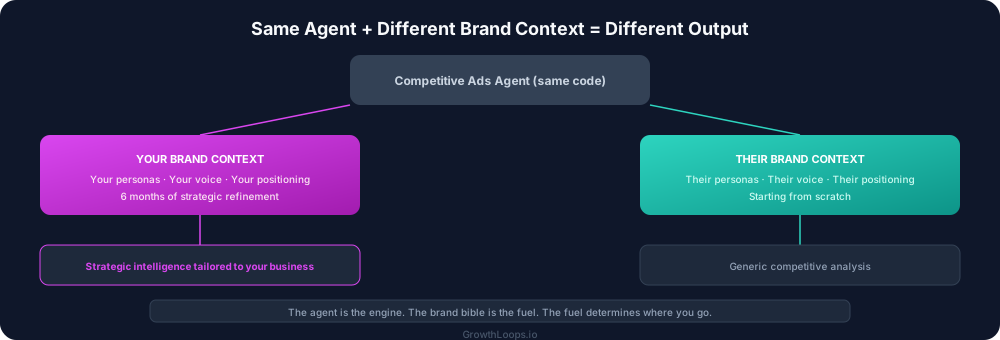
The same agent, two completely different outputs
Take my competitive ads agent. It scans Meta, LinkedIn, and Google ad libraries, extracts messaging patterns, and identifies gaps.
When I run it, it reads my CLAUDE.md file first. That file contains my four buyer personas with their specific fears and buying triggers. My five messaging pillars. My voice rules. My competitive positioning. My career data. My banned words list.
So the competitive scan is filtered through my strategic lens. The gaps it identifies are gaps relative to my positioning. The recommendations it makes are framed in my voice for my buyers. The output is not generic competitive intelligence. It is strategic intelligence tailored to my business.
When someone else clones the repo and runs the same agent, it reads their CLAUDE.md file. Different personas. Different positioning. Different voice. The same agent produces completely different output because the context is different.
The agent is the engine. The brand bible is the fuel. The fuel determines where you go.
Why most AI marketing fails
Most companies using AI for marketing skip the brand context step. They open ChatGPT, ask it to write a blog post, and get generic output. They try Claude Code, build an agent, skip the CLAUDE.md file, and get generic output.
Then they conclude that AI cannot write good marketing content.
AI can write excellent marketing content. It just cannot do it without context. The context is the part most people skip because it requires real strategic work. Defining your personas is hard. Articulating your voice rules is hard. Writing down your banned words means admitting that marketing buzzwords are a crutch you have been leaning on.
The brand bible forces clarity. It forces you to answer the questions that most marketing teams leave vague: Who exactly are we talking to? What do they actually care about? How should we sound? What should we never say?
Those answers are the moat. Not because they are secret. Because they are specific to your business and they require genuine strategic judgment to get right.
What a strong brand bible contains
I have built brand bibles for my own company and for the framework I teach. The structure is consistent:
Business context. Not your mission statement. What you actually do in plain language and who you do it for.
Buyer personas. Not demographics. Behavioral profiles with specific pain points, fears, buying triggers, and the language they use to describe their problems. The language part is critical. When AI writes using your buyer's actual language, the output resonates in a way that marketing jargon never does.
Voice rules. The specific constraints that make your brand sound like your brand. Mine include: statement openers only, never start with a question, lead with pipeline not activities, specificity over platitudes, soft CTAs only. Each rule eliminates a category of generic output.
Banned words. The comprehensive list of words that signal "AI wrote this" or "marketing team did not try." Synergy. Leverage as a verb. Holistic. Innovative. Disruptive. Seamless. The list should be long enough to hurt a little when you read it.
Competitive positioning. Not feature comparisons. The strategic narrative about why you exist in the market and how you are different from the alternatives. Every agent reads this and frames its output accordingly.
The compounding effect
Here is why the brand bible is the moat and not just a configuration file.
Every engagement, every campaign, every competitive scan teaches you something new about your market. That learning feeds back into the brand bible. The personas get sharper. The voice rules get tighter. The positioning gets more precise.
A brand bible that has been refined over six months of active use produces dramatically better agent output than one written yesterday. The accumulated strategic intelligence compounds. Every refinement makes every agent in the system more effective.
That compounding cannot be replicated by cloning a repo. Someone can copy the agent code. They cannot copy six months of strategic refinement based on real market feedback. They start at zero while you are already compounding.
What this means for your AI strategy
If you are investing in AI marketing tools without investing in your brand context, you are building on sand. The tools will produce generic output. Your team will be disappointed. You will conclude that AI does not work for marketing.
Flip the order. Invest the time in the brand bible first. Define the personas with real specificity. Write the voice rules that make your brand yours. Build the banned words list that eliminates generic output.
Then deploy the agents. The output quality will be transformative. Not because the agents are magic. Because the context is right.
The agents are commodities. The brand bible is the competitive advantage. Build the foundation first. Everything else compounds from there.