What Happened When I Trained a Non-Technical Founder to Use Claude Code
I get the same objection from founders every time I talk about building AI agents: "I am not technical enough for that."
It is the most common objection and it is completely wrong. I know it is wrong because I am not technical. I have never written a line of code by hand. And I have built 25 AI agents, a blog publishing pipeline, analytics dashboards, and an entire marketing operating system using Claude Code.
But telling founders "trust me, you can do it" does not work. They need to see it. So I started walking people through their first build live. Here is what consistently happens.
The first 15 minutes: skepticism
Every founder I have walked through this process starts the same way. Arms crossed (metaphorically, since we are usually on Zoom). Polite but skeptical. They have tried ChatGPT. They have been disappointed. They have been told AI would change their business and it generated generic blog posts that they would never publish.
I do not argue with the skepticism. I validate it. ChatGPT without context produces generic output. That is a correct observation. But that is not what we are about to do.
The "describe what good looks like" exercise
I ask them one question: what is the most repetitive task in your marketing that you wish someone else could handle?
The answers are always some version of: competitive research, content reformatting, email personalization, or reporting.
I pick whichever one they are most frustrated by. Then I ask them to describe what the perfect version of that task looks like. Not in technical terms. In marketing terms.
"What information do you need to start?" They answer in their own words.
"What should the output look like?" They describe it.
"What should never happen in the output?" They have strong opinions about this.
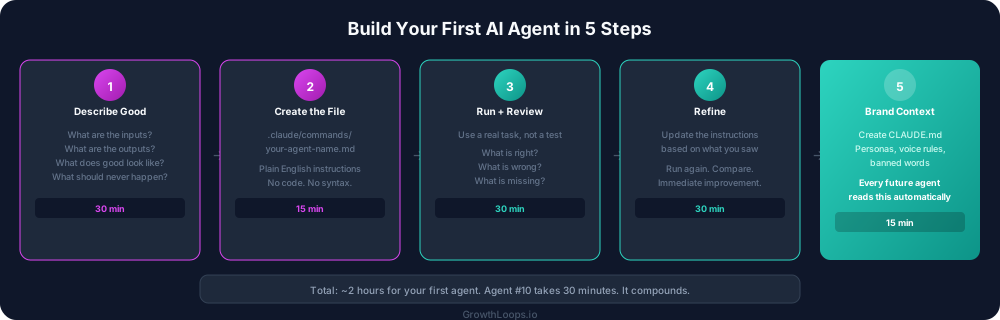
Within 15 minutes, they have written a specification. They do not realize it is a specification. They think they are just answering questions about their business. But what they have produced is exactly what goes into a skill file.
The build: 20 minutes
I open Claude Code, create the skill file, and paste their specification into it. I run it with a real input from their business.
The output comes back. It is not perfect. First versions never are. But it is clearly doing the right thing. The structure matches what they described. The information is relevant. The format is close.
This is the moment. Every single time, the founder leans in and says some version of: "Wait. Can we change the second section to focus more on [specific thing]?" or "The tone is too formal, we are more casual than that."
They are refining the agent. They are not thinking about technology. They are thinking about what good marketing looks like for their business. They are doing the thing they were afraid they could not do.
The second run: the moment it clicks
I update the skill file with their feedback. Run it again. The output improves noticeably.
This is when the mental model shifts. They realize that the skill is not magic. It is instructions. Better instructions produce better output. They already know how to write better instructions because they know their business.
The founder who said "I am not technical enough" 30 minutes ago is now suggesting refinements to the agent's workflow. "What if we added a section that pulls their recent blog posts?" "Can it check if they have changed their pricing page?" "Can we make it send the output to Slack?"
They are thinking in systems. Nobody taught them to think in systems. They already thought that way about their business. Claude Code just gave them a way to express it.
The patterns I see every time
Pattern 1: The specification is the hard part, and they already know how to do it. Writing the skill file is not a technical challenge. It is a strategic challenge. What should the agent do? What does good look like? What rules should it follow? Every founder knows the answers because they live with these workflows every day.
Pattern 2: The first refinement builds confidence. Seeing the output improve after a simple instruction change proves that the process works. They are not debugging code. They are editing a document. The barrier between "I have an idea for how this should work" and "the system does what I want" is one edit and one re-run.
Pattern 3: The second agent idea comes before the first one is finished. Without exception, every person I have trained has said "Okay, so could I also build one that does [something else]?" before we finish refining the first agent. The mental model shift opens up possibilities they had not considered.
Pattern 4: The brand bible exercise is where they get the most value. When we sit down to write the CLAUDE.md file, founders end up articulating things about their brand, their buyers, and their positioning that they have never written down before. The exercise of codifying brand context for AI is simultaneously the best brand strategy exercise most companies never do.
What "not technical enough" actually means
When a founder says "I am not technical enough," what they mean is "I have never written code and I assume building AI tools requires writing code."
It does not. Building AI agents in Claude Code requires the ability to describe what you want clearly. That is a communication skill, not a technical skill. It is the same skill that makes someone good at writing creative briefs, managing agencies, or training new hires.
The founders who are best at building agents are not the ones with technical backgrounds. They are the ones who know their business deeply and can articulate what they need with precision. That precision is what makes the agent smart.
The takeaway
If you are a founder or marketing leader who has been watching the AI agent conversation from the sidelines because you think it is not for you, you are wrong. Not in a dismissive way. In a factual way. The barrier you think exists does not exist.
The skill you need is the skill you already have: deep knowledge of your business and the ability to describe what good looks like. Claude Code handles the rest.
The first agent takes about two hours. The moment it works, you will wonder why you waited.